Electric or gas? Start here
An electric oven heats with a bake element at the bottom and a broil element at the top, both on a 240V circuit. On many newer ovens the bake element is hidden under the oven floor.
Most gas ovens light with a glow-bar igniter, also called a hot-surface igniter, wired in line with the gas safety valve. The valve opens only once the igniter passes enough current, so it can glow and still not light the oven.
Electric oven won't heat
For an electric oven not heating up, the cause is usually one of these, most common first:
- A failed bake element. A burned-out exposed element often shows a blister, a break or a spark mark. Broil working while bake doesn't is a common sign, though a failed bake relay looks the same.
- The temperature sensor. If the probe on the back wall reads wrong, the control can think the oven is already hot and stop heating.
- A relay, the control board or a burned wire. If the element is good but gets no power, the fault is upstream: a relay that no longer closes, the board itself or a burned wire at the element's terminal.
- A blown thermal fuse. It cuts power when the oven overheats, so an oven that quit right after a self-clean often has a blown fuse, or a control board that didn't survive the heat.
- A lost leg of 240V power. The clock runs on one of the supply's two 120V legs; the elements need both. Lose a leg at the breaker, outlet or wiring, and the display can stay on while nothing heats. A breaker or house-wiring fault is a job for an electrician.
Gas oven won't heat
Set the oven to bake and, keeping your face back, watch the igniter through the slots in the oven floor:
- It glows, but there's no flame after about 90 seconds. The most common reason for a gas oven not heating: an aging igniter still glows but can't pass enough current to open the safety valve. The fix is a new igniter.
- It lights late with a loud whoomp. Delayed ignition is another sign of a weak igniter. Turn the oven off and leave it off until it's checked.
- It doesn't glow at all. The igniter has burned out, or it isn't getting power from the wiring or the control.
- The flame lights, then goes out and stays out. Usually the safety valve, a failing igniter or, on ovens that light by spark, the flame sensor. A burner cycling off at temperature and relighting is normal.
If the cooktop burners light but the oven won't, that's typical of an igniter failure, and good news: gas is reaching the range.
Don't try lighting a gas oven with a match. If you smell gas, leave and call your gas utility.
Oven heats but won't reach or hold temperature
If preheat drags on or food is underdone at the recipe's time, the oven won't reach temperature or hold it. Check for:
- Sensor drift. The sensor reads a little off without failing outright, so the oven runs steadily cool or hot.
- A failed element or a weak igniter. On an oven that preheats with both elements, losing one makes preheat drag; on gas, a weak igniter lights the burner late on every cycle.
- A leaking door seal. A torn door gasket or a worn hinge leaves a gap.
- A calibration offset. Many controls let you shift the temperature. If someone changed it, the oven runs off by that amount.
To check, set an inexpensive oven thermometer on the middle rack and heat to 350°F. About 20 minutes after preheat, take a few readings without opening the door, since ovens cycle above and below the setting. If the average is off by more than about 15°F, adjust the offset as your owner's manual shows. If that can't close the gap, or the gap keeps changing, suspect the sensor, the control or, on a gas oven, the igniter.
Oven heats unevenly
If one side of the pan burns while the other stays pale, the heat isn't spreading evenly. The usual causes:
- One element doing all the work. Many electric ovens preheat with both elements. If one has failed, food browns hard from only the top or the bottom.
- A convection fan that isn't spinning. On convection, the back-wall fan should run with the door shut; if it's silent, convection baking comes out uneven.
- Racks and foil. Bake on the middle rack with room for air around pans, and keep foil off the oven floor.
- A warped door. If the door doesn't sit flat, heat escapes on one side.
What you can safely check first
None of these touch gas or wiring. If anything looks or smells burned, stop there.
- The breaker. An electric oven is on a double breaker. Switch it fully off, then back on; a breaker can trip partway and still look on. If it trips again, leave it off and call. A gas oven's igniter needs power too.
- The settings. Make sure delayed start, Sabbath mode and the control lock are off. Demo (showroom) mode is easy to miss: the display lights, but the oven won't heat. On older dial-clock ovens, set the timer to manual.
- The door lock. After a self-clean, the door must unlock before the oven will bake; if it stays locked once fully cool, the latch may be stuck.
- The actual temperature. If it heats but runs cool, do the 350°F thermometer check above.
- The elements. With the breaker off and the oven cool, look over any visible element for blistering, a break or a burn mark. Don't touch it, and don't pull up the oven floor to reach a hidden one.
That's as far as a homeowner should go. Testing or replacing parts on a 240V oven is technician work, as is anything involving a gas oven's igniter, burner or safety valve, the gas line or the connections behind the range. If you smell gas, leave and call your gas utility.
When to call PowerClean
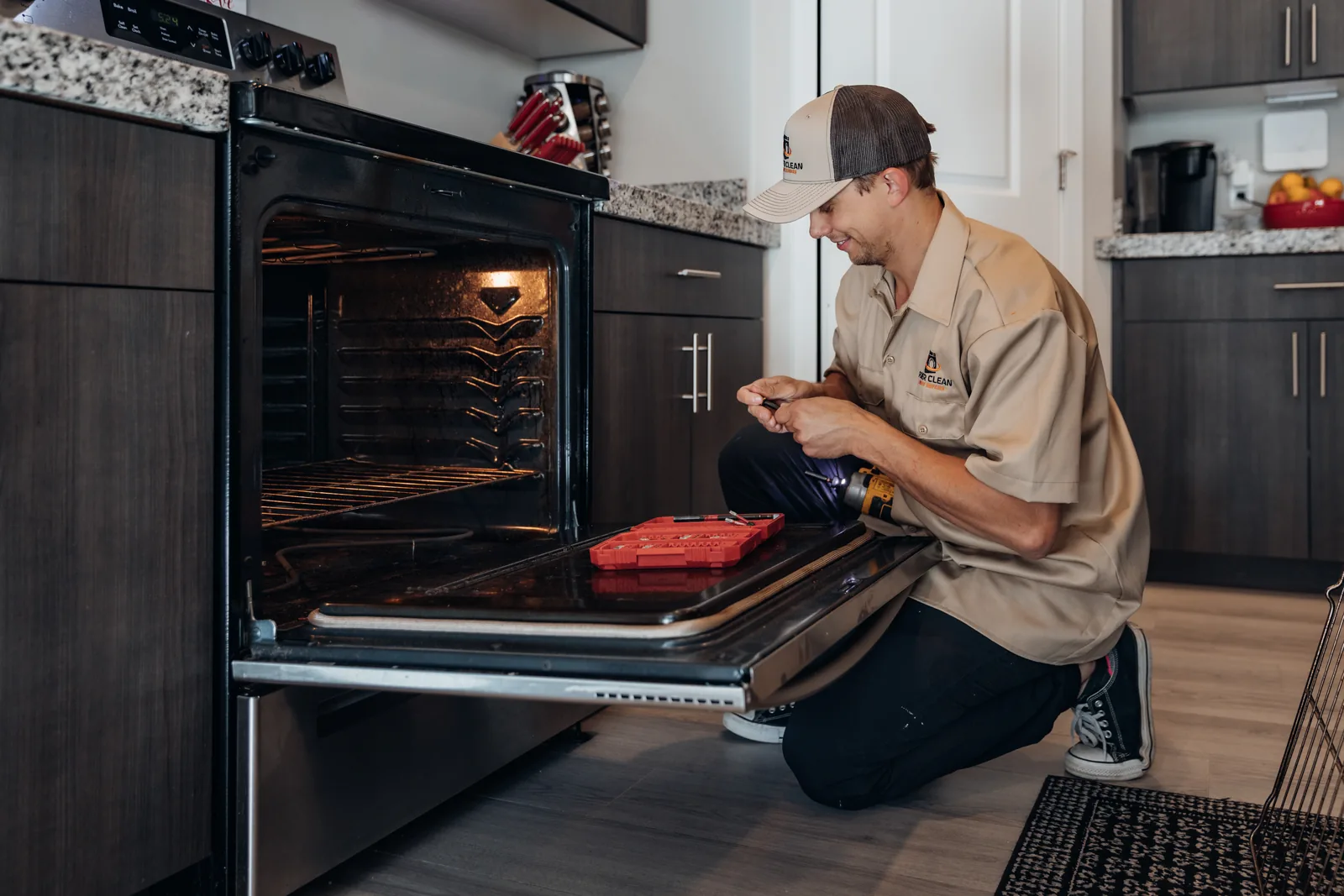
Call us when those checks don't find the problem, an element looks damaged or a gas igniter glows but nothing lights. A technician tests the element, sensor, igniter and supply voltage to find the part that actually failed. An $80 diagnostic gets you repair options and pricing before any work begins, and it's credited toward the repair if you go ahead.
Element, igniter, sensor and thermal fuse repairs often finish in one visit when your model's part is on the truck. Control boards may need to be ordered. We use OEM parts whenever they're available. Our gas and electric oven repair page covers the rest, wall ovens included.
For a cooktop burner or element that won't heat, see our stove, range and cooktop repair page. On a Whirlpool oven that won't reach temperature, the usual causes are a failing bake element, a drifting sensor or, on gas models, a weak igniter. Our Whirlpool repair page covers the brand's other common faults. To book, call 801-648-8639 or request a visit online.
Dealing with this yourself? We can usually fix it the same day.