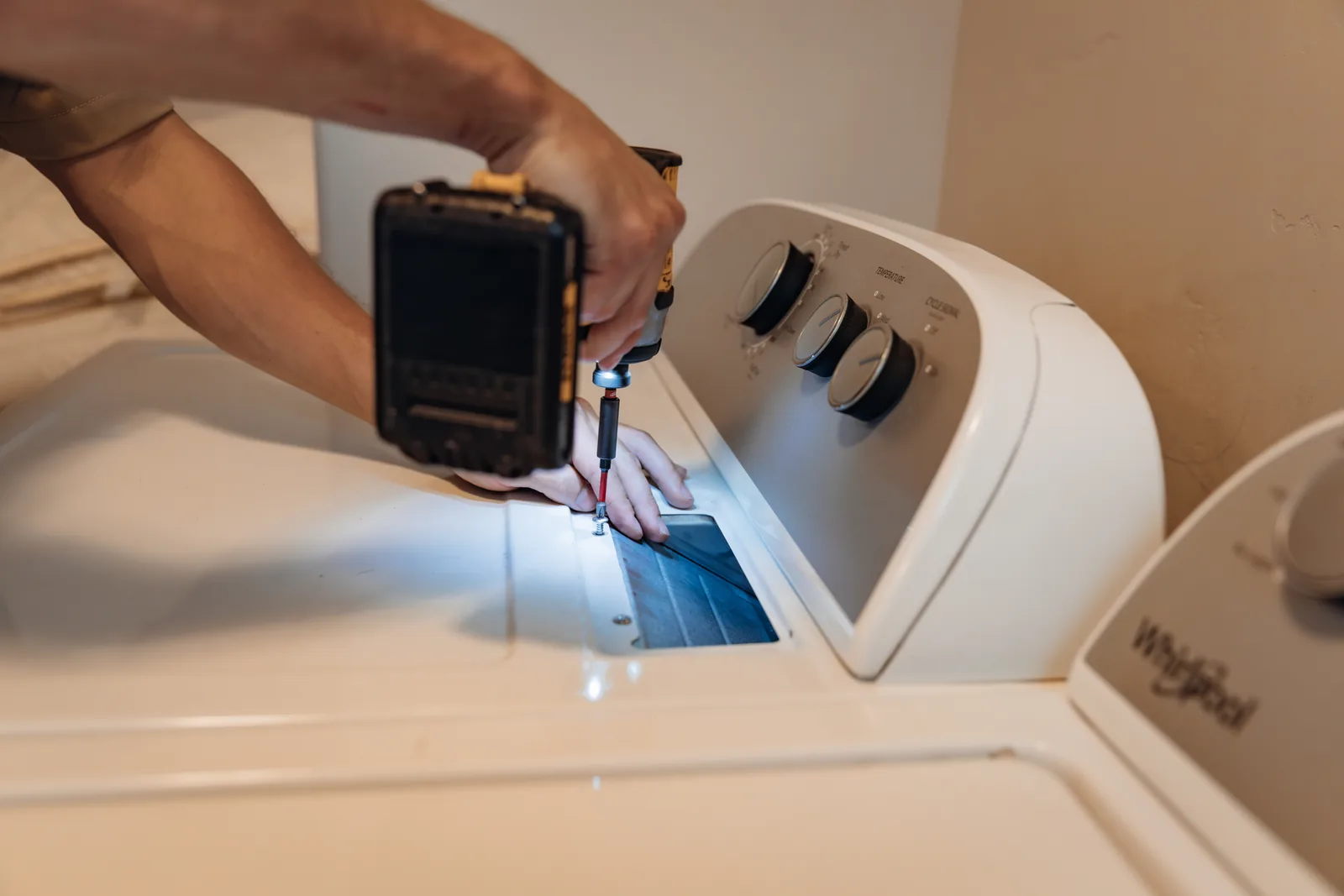
Why is slow drying usually an airflow problem?
A dryer has two jobs: heat the load and carry the moisture away. Restrict the exhaust and the dryer still makes heat, but the wet air can't leave.
Poor airflow also cuts the heat. With less air moving past the element or burner, the heater and exhaust run hot. The cycling or high-limit thermostat then switches the heater off until it cools, so much of the cycle runs without heat. In our experience, airflow is the most common cause of slow drying by a wide margin.
Lint burns easily, so a hot dryer pushing against a blocked vent is also the classic setup for a dryer fire.
1. A restricted exhaust vent
The restriction can be anywhere between the dryer and the outside hood:
- Lint packed in the duct. It collects at elbows and low spots.
- A crushed transition hose. It flattens when the dryer is pushed back too far. Thin foil and plastic hoses crush easily and trap lint, and plastic can melt or burn, so dryer makers call for rigid or semi-rigid metal duct.
- A stuck flap at the outside hood. Lint or paint can hold it shut, or shrubs and snow can block a low hood.
- A long run with many elbows. Every bend adds resistance.
- A nest or a screen at the hood. Birds nest in vent hoods. Screens trap lint, which is why building codes don't allow screens on dryer vents.
Telltale signs are a hot top panel, hot but damp clothes, a musty laundry room and an outside flap that barely moves. When drying is slow, the vent path is the first thing we check on a dryer repair visit.
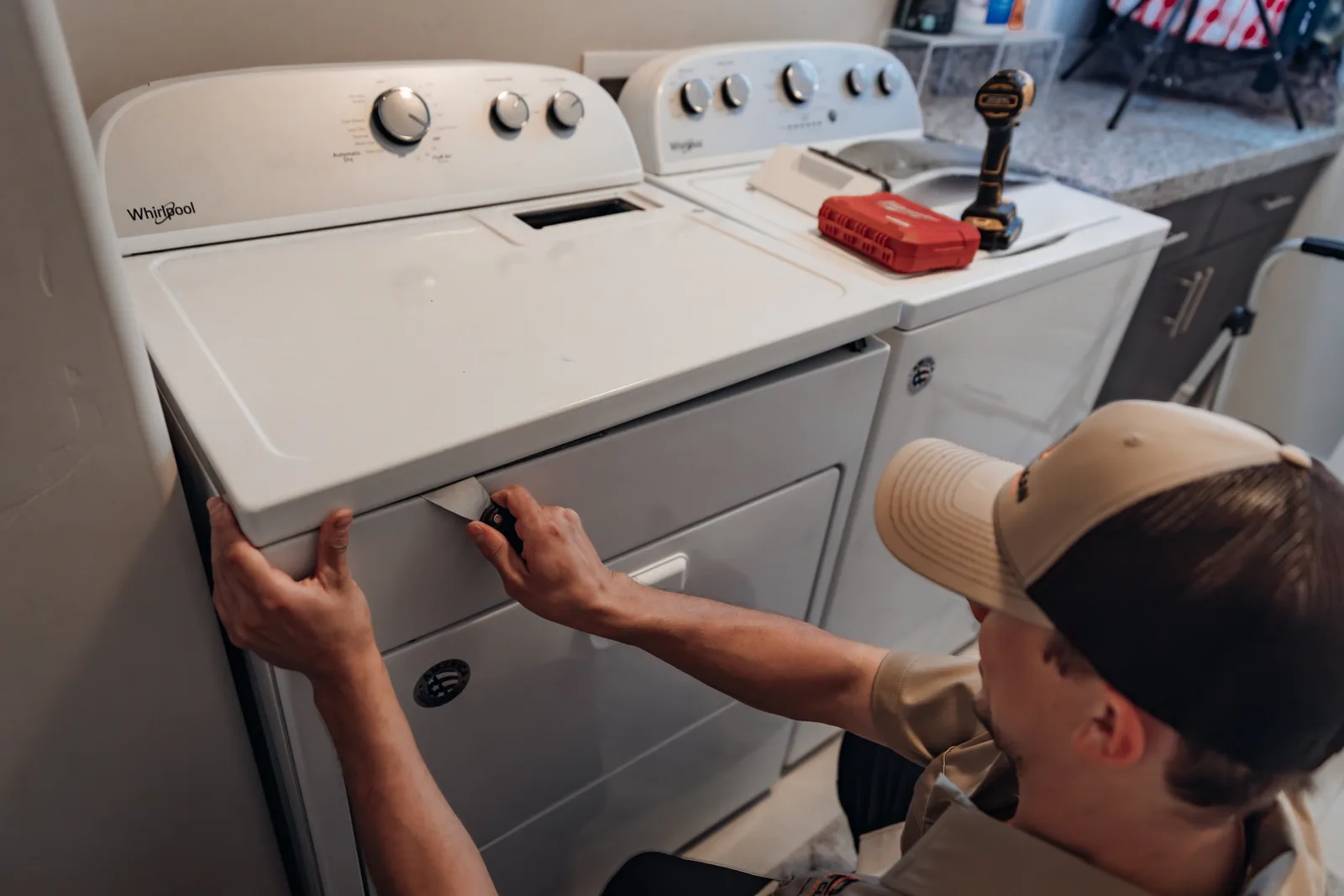
2. A lint screen coated with dryer-sheet film
Dryer sheets and liquid fabric softener leave a nearly invisible waxy film on the lint screen, so a screen that looks clean can still be blocked.
Hold the clean screen under the faucet. If water beads up on top instead of running through, it's coated. Scrub both sides with hot water, a little liquid detergent and a soft nylon brush, then let it dry completely. If you use dryer sheets, wash it every month or so.
3. A half-working heating element or weak gas valve coils
When the cause is on the heat side, the dryer gets warm but never really hot.
- Electric dryers. Some heating elements have two coils. If one burns open, the other still heats, just not enough to finish a load in one cycle.
- Gas dryers. Small electric coils open the gas valve. Weak coils can quit as they warm up. The flame lights and goes out after a few minutes, and the igniter glows again, but the burner won't relight until the coils cool.
Testing either part means opening the cabinet of a 240-volt or gas appliance, so leave both to a technician. If you smell gas, leave and call your gas utility. If the dryer makes no heat at all, see why a dryer runs but won't heat.
4. A faulty cycling thermostat or thermistor
A dryer holds its temperature by switching the heat on and off, using a cycling thermostat or, on electronic models, a thermistor that reports to the control board. If either drifts, it can shut the heat off well before the drum is up to temperature. The dryer short-cycles: heat on briefly, then off for a long stretch.
That mimics a restricted vent, so we rule out airflow first, then test these parts with a meter instead of guessing.
5. Coated moisture sensor bars
On dryers with moisture sensing, sensor-dry cycles end when two metal strips inside the drum, the moisture sensor bars, stop detecting damp clothes. Residue from softener and dryer sheets insulates the bars, so the dryer decides the load is dry too early. The giveaway is a timed cycle that dries the load while the sensor cycle leaves it damp.
Cleaning them is a safe homeowner fix. With the power off at the plug or breaker, find the two strips, usually on the drum's front wall just inside the door or near the lint screen. Wipe them with a soft cloth and a little rubbing alcohol.
6. A clogged or slipping blower wheel
The blower wheel is the fan that moves air through the dryer. Lint, socks and dryer sheets that slip past the screen can wrap around its blades. A worn hub can also slip on the motor shaft, so the wheel turns slower than the motor.
Signs include weak air at the outside hood even with a clear vent, and a rattle or scraping noise from the dryer. Reaching the blower wheel means taking the dryer apart, so it's one for a technician.
7. A washer that isn't spinning the water out
Sometimes the dryer is fine and the washer is the problem. If it doesn't reach full spin speed, the load goes into the dryer far wetter than it should, and even a healthy dryer needs a second cycle.
Clothes from the washer should feel damp, not heavy and dripping. A washer that won't spin properly usually comes down to a slow drain, a faulty lid or door lock, or a worn belt or coupling, all routine repairs for us. If the washer senses an unbalanced load, it also slows the spin; rearranging the load fixes that. See our washing machine repair page.
What you can safely check first
Unplug the dryer or switch it off at the breaker first. On a gas dryer, use the breaker, leave the machine in place and don't touch the gas line or valve. If you smell gas, leave and call your gas utility.
- Wash the lint screen if water beads up on it.
- Wipe the moisture sensor bars with a little rubbing alcohol.
- Check the transition hose (electric dryers). Pull the dryer out, straighten any kinks, reattach a loose end and leave a few inches behind it when you push it back. Replace a plastic or thin foil hose with semi-rigid metal duct.
- Feel for airflow outside. With the hose connected and the power on, run the dryer on heat for 5–10 minutes. The air at the hood should feel at least as strong as a hair dryer on high, and the flap should open wide. Skip this check if you can't reach the hood from the ground.
- Don't overload. Dry heavy towels and bedding in smaller loads.
Stop there — the heating element, thermostats, gas valve and blower wheel are inside the cabinet. A clean lint screen every load and a vent cleaning once a year are the core of basic washer and dryer maintenance.
When to call PowerClean
Call us if these checks don't solve it or the top of the dryer still gets hot. We check airflow and the heat side on the same visit, so you'll know whether it's the vent, a part or both.
Our technicians inspect the vent path and clear blockages as part of a dryer repair visit. They also replace heating elements, gas valve coils, thermostats, moisture sensor bars and blower wheels. We carry the parts that fail most often, so most repairs finish in one visit. The $80 diagnostic gets you repair options and pricing before any work begins, and it's credited toward the repair if you go ahead.
See our dryer repair page for gas and electric dryers, or our Whirlpool appliance repair page if yours is a Whirlpool or Maytag. To book, request service online.
Dealing with this yourself? We can usually fix it the same day.