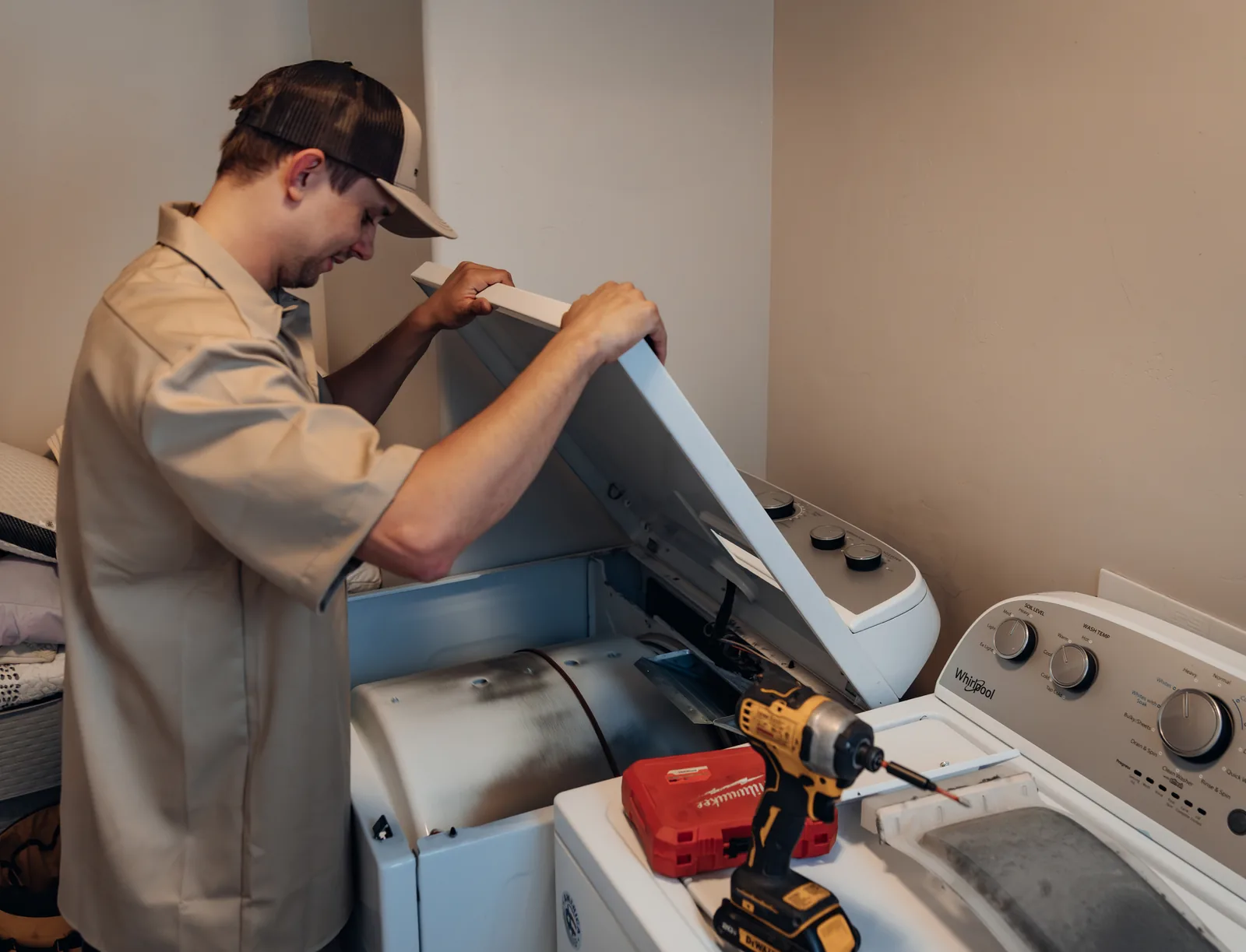
1. Clean the lint screen every load — and wash it monthly
Pull the lint off before every load. A full screen chokes airflow, stretches drying time and makes the dryer run hotter. Replace a torn one.
Dryer sheets also leave an invisible waxy film on the mesh, so wash the screen monthly in warm, soapy water with a soft brush and let it dry completely. The water-bead test shows the film: water run over the mesh beads up instead of passing through.
2. Have the dryer vent checked yearly
A lint-clogged vent is the most common reason a dryer that heats fine needs two cycles, and it's a fire hazard. Once a year, have the whole path checked and cleared:
- Transition hose: rigid or semi-rigid metal, never plastic or vinyl, and not crushed behind the dryer.
- Duct: long runs with several elbows clog soonest.
- Outside hood: with the dryer running, the flap should open and air should blow out strongly.
Our guide to why a dryer takes too long to dry covers the warning signs. Our technicians inspect the vent path and clear blockages as part of a dryer repair visit.
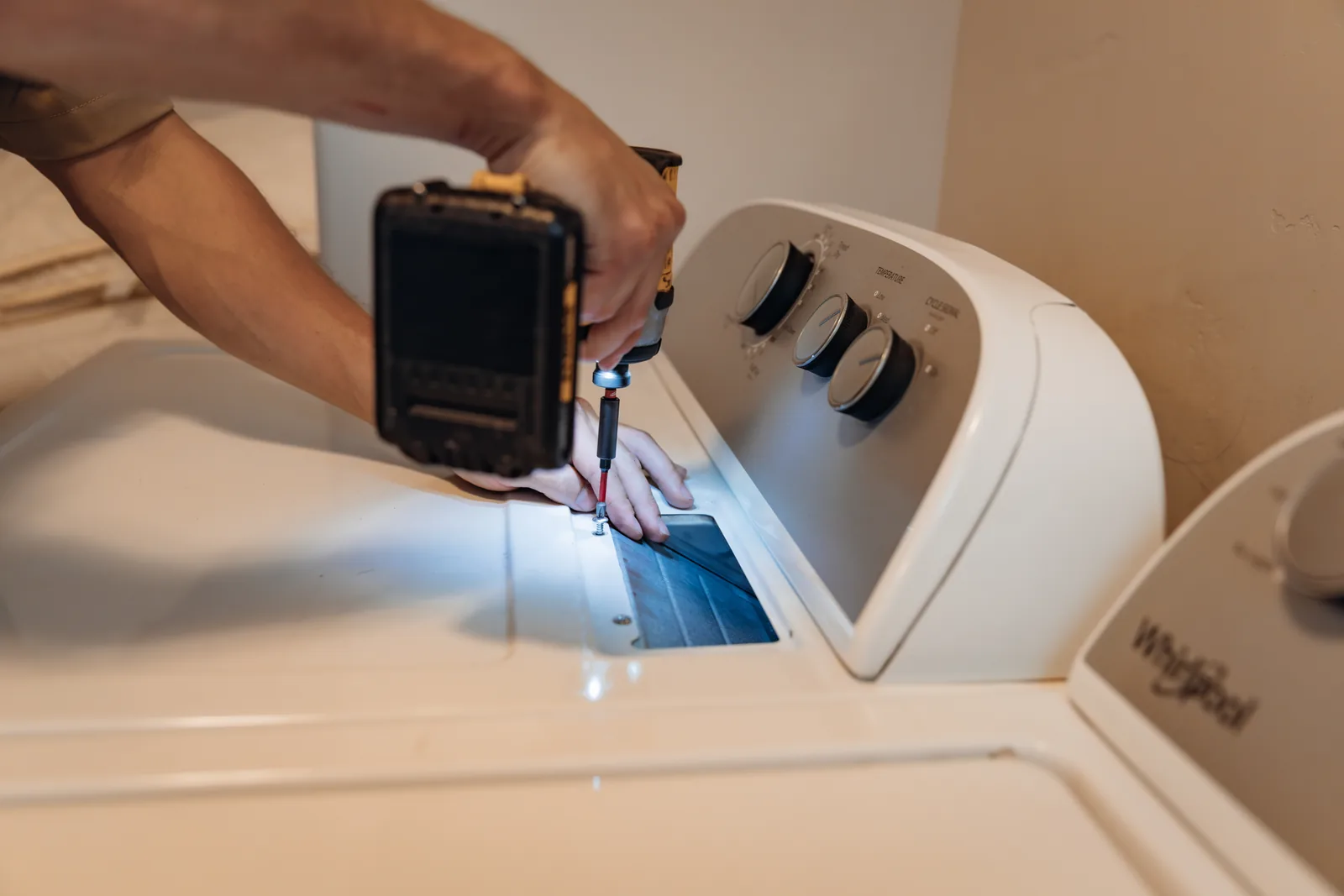
3. Replace rubber fill hoses every five years
Fill hoses stay under pressure whenever the valves are open, so a burst hose can flood the room before anyone notices. Replace rubber hoses about every five years — sooner if one bulges, cracks or drips at a fitting — and write the install date on each.
Braided stainless hoses are much harder to burst but still have rubber inside, so check them yearly and follow your manual's replacement schedule. Shut the valves, usually behind the washer, before you swap hoses or leave on a long trip.
4. Don't overload either machine
An overstuffed washer can't move clothes through the water, so they don't come clean. The heavy, often off-balance load also wears the suspension, the tub bearings and, on belt-drive models, the belt. Use the one-hand rule: a hand should fit between the load and the top of the drum.
An overloaded dryer dries slowly and wears its drum rollers and belt sooner. In a washer, worn bearings and suspension parts show up as grinding or banging on spin — see our washing machine repair page.
5. Clean the drain pump filter monthly (front-loaders)
Most front-loaders have a drain pump filter, a trap for coins and lint, behind a small door at the bottom front. When it clogs, the washer drains slowly or stops with water in the drum. A Samsung shows this as a 5C or 5E code, explained in our Samsung drain error guide. Our Samsung appliance repair page covers other faults.
Samsung and LG suggest cleaning the filter about once a month, and it shouldn't go longer than a few months. Unplug the washer, let hot water cool, set out towels and a shallow pan, drain the small tube beside the filter if there is one, then unscrew the filter slowly.
6. Leave the door and dispenser drawer open after a cycle
Front-loaders seal tightly, which traps moisture. Close the door on a wet drum and the rubber gasket stays damp. That's where mold and that musty smell start. After the last load, leave the door and the dispenser drawer open, and keep small children out of the laundry room.
Every week or two, pull back the gasket fold and wipe out water and lint. We can replace a torn or mold-stained gasket.
7. Use the right amount of HE detergent
High-efficiency washers use much less water, so they need low-sudsing HE detergent — and less of it than many people pour. Measure to the cap's load-size line, not the top, and don't use liquid detergent with a pod.
Excess suds make the washer pause and add rinses, so cycles run long and clothes come out wetter. Leftover residue builds up in the dispenser, gasket and drain path, feeding odors.
8. Keep the washer level
An unlevel washer rocks on spin, wears its suspension and bearings faster and can walk across the floor. Modern washers slow or stop the spin when the drum is off balance — on an LG, that's the UE code in our LG UE and DE code guide.
Check it with a level both ways, adjust the feet, then tighten the lock nuts. A UE that keeps coming back on a level machine with a normal load usually means worn suspension parts — see our LG appliance repair page.
9. Empty pockets and zip zippers
Coins, keys and hair ties are common culprits in a clogged drain pump filter, and on a top-loader without one, a coin can jam the pump. Underwires can slip through the drum holes and lodge between drum and tub, so wash underwire bras in a mesh bag.
Zip zippers and fasten hooks, too: open ones snag clothes and can nick a front-loader's door gasket, and a torn gasket leaks.
10. Run a monthly cleaning cycle and wipe the dryer's moisture sensor
Once a month, run the washer's tub-clean or self-clean cycle empty, with whatever your manual calls for — a cleaner tablet, bleach on some models, or nothing — and never mix bleach with other cleaners. No cleaning cycle? Run the hottest cycle with a washer cleaner. Residue builds up faster in hard water.
Sensor-dry cycles read moisture through two metal strips inside the drum, usually near the lint screen. Dryer-sheet film can coat them, so the dryer stops while clothes are still damp. With the dryer unplugged or off at the breaker, wipe the strips with rubbing alcohol.
What you can safely do yourself: a washer and dryer maintenance checklist
Unplug the machine or switch it off at the breaker first, shut the water valves before you touch a hose, and leave the machine's panels on. Behind a gas dryer, look but don't pull it out. If you smell gas, leave and call your gas utility.
- Every load: clean the lint screen, empty pockets, load loosely, leave the washer door open.
- Every week or two: wipe the front-loader's gasket fold.
- Monthly: cleaning cycle, drain pump filter, dryer sensor strips, lint screen wash.
- Yearly: have the vent checked and cleared, inspect the hoses, level the washer.
- Every five years: new rubber fill hoses.
As the "How to keep costs down" section of our Utah repair cost guide puts it, maintenance is far cheaper than an emergency call.
Maintenance not enough? When to call PowerClean
Call us when you notice:
- Grinding, banging or squealing
- Water under the washer after new hoses
- Two-cycle drying with a clean screen and a clear vent
- A drain code that returns after you clean the filter, or a UE on a level machine
- A burning smell from the dryer — stop using it until it's checked
Our post on the five most common washing machine problems explains what's behind each one.
One of our two technicians comes to you, diagnoses the problem and gives you repair options and pricing before any work. The diagnostic is $80, credited toward the repair if you go ahead. We carry the parts that fail most often, so most repairs finish in one visit. See our washer repair and dryer repair pages or request service online.
Still dealing with this? We can usually fix it the same day.